Interview, Explained
In-depth breakdowns of tech interviews — section-by-section analysis with diagrams, quotes, and insights.
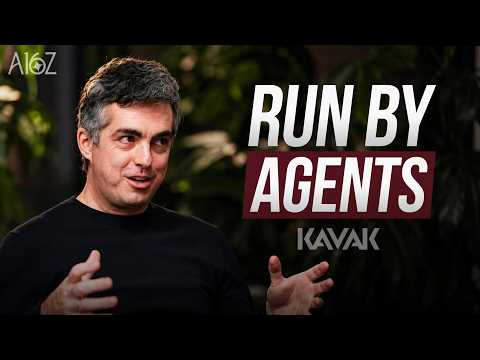 ~37 min
Alejandro Maza on running a company on 200,000 agents a day
Kavak's Chief Product & AI Officer, Alejandro Maza, explains how they tore the used-car company down and rebuilt it around long-running agents — one per customer, up to 200,000 a day — betting that the real unit of AI transformation is the whole organization, not the task or the tool.
 ~56 min
Stephen Haney on the handoff that serves humans and agents
Paper founder Stephen Haney explains why building a design tool on web-native HTML and CSS turns one artifact into a shared handoff for humans and coding agents alike — and why taste and design judgment stay a human job.
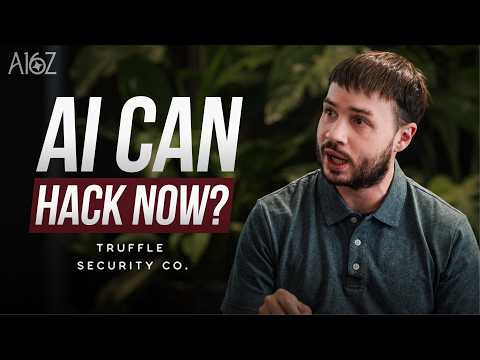 ~24 min
Dylan Ayrey & Feross Aboukhadijeh on AI Taking the Easiest Way In
Two security founders explain how AI removed the last real barrier to hacking — expertise — turning old weaknesses like leaked credentials and unvetted packages into the fastest, cheapest way into almost any system.
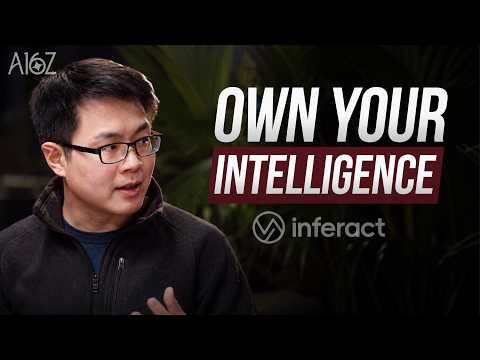 ~46 min
Simon Mo on why open-source inference became AI's control layer
Simon Mo, lead maintainer of vLLM, argues that open-source inference has quietly become AI's critical infrastructure — the control layer that turns commodity GPUs into intelligence, and where capability parity leaves control over speed, guardrails, and economics as the real contest.
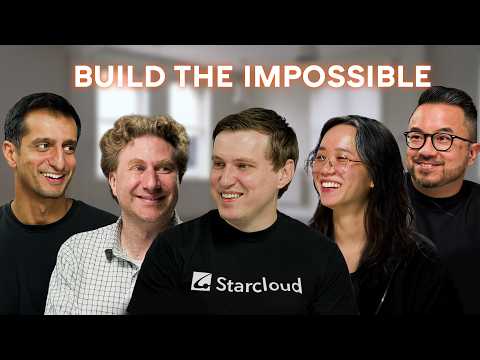 ~36 min
Philip Johnston on Why AI's Next Data Center Is in Orbit
Rejected by 100+ VCs as 'the dumbest idea they'd ever heard,' Philip Johnston bet that collapsing launch costs make solar-powered data centers in orbit inevitable — and turned StarCloud into the fastest-growing unicorn in YC history.
 ~39 min
Boston Children's on AI that cracked 18 rare-disease cold cases
A Boston Children's and OpenAI workflow ran o3 deep research over 376 hard rare-disease cases, surfaced evidence that led to 18 new diagnoses, and even proposed a novel gene hypothesis, with human geneticists validating every lead.
 ~41 min
Anne Hecht on why autonomous agents only pay off when governed
NVIDIA's Anne Hecht explains how enterprises deploy autonomous agents safely: treat each agent as a whole system, engineer the guardrails in from the start, and run open and frontier models side by side.
 ~49 min
Dmitri Dolgov on why a working demo is 1% of the product
Waymo's co-CEO turns two decades of self-driving into a seven-lesson playbook for physical AI, where a working demo is 1% of the work, every added nine of reliability costs roughly 10x, and the real moat is the evals, simulation, and hundreds of millions of autonomous miles backed by publicly audited safety proof.
 ~103 min
Philip Kiely & Ali Taha on why inference still ships 10x, not basis points
Baseten's Philip Kiely and Ali Taha open up the inference stack — cache-aware routing, error-canceling quantization, speculators, and cross-cluster race conditions — to argue inference is a young enough field to still win in multiples, and one that's collapsing into training to build models that optimize themselves.
 ~31 min
Patrick Collison on Why It's Never Been a Better Time to Start
Stripe's CEO argues the AI era has lowered the cost of starting a company and widened who can win — making the classic fears, and the classic lean-startup playbook, look overstated.
 ~34 min
Melisa Tokmak on automating everything except the labor
Netic founder Melisa Tokmak is building an autonomous enterprise for essential-services businesses — HVAC, roofing, pet care — where over 70% of the businesses it serves now go 'Netic-first,' betting that the moat is the last-mile orchestration and proven ROI that raw models skip.
 ~80 min
Jesse Zhang & Ashwin Sreenivas on Why the Moat Isn't the Model
Decagon's founders argue that in the agent era the durable moat isn't the model but the software and process around it — fine-tuned 'model factories,' encoded business logic, and the machinery that makes frontier capability deployable inside the enterprise.