Interview, Explained
In-depth breakdowns of tech interviews — section-by-section analysis with diagrams, quotes, and insights.
 ~11 min
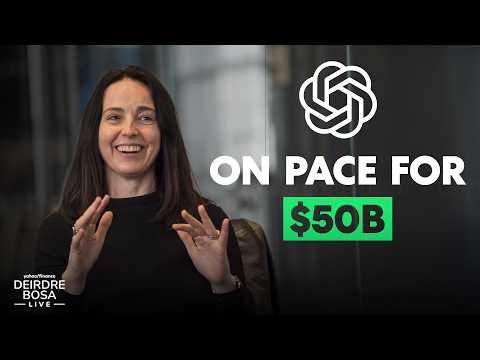
Sarah Friar on Training AI at Altitude
OpenAI's CFO reads a $50B-ARR quarter as the payoff of a deliberate sequence: land enterprises on cyber, train new products on their hardest problems first, then ride the frontier down the cost curve toward 1.2 billion consumers.
 ~27 min
Joseph Kim on the 20% the base model won't build for you
OpenAI's ChatGPT-for-finance lead on why the base model is only the easy 80% of a product, and why the hard, durable 20% is in-house data, an org-chart safety model, taste trained from human judgment, and evals that predict the job.
 ~55 min
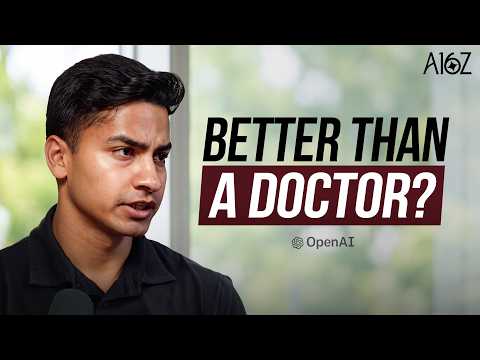
Karan Singhal on raising health's floor and ceiling
OpenAI's head of health AI, Karan Singhal, lays out a two-part mission — make trustworthy health intelligence abundant for everyone, and push medicine past what's possible today — built on clinician-shaped training that prioritizes safety over the reassuring answer.
 ~39 min
Greg Brockman on why new knowledge from AI is now impossible to deny
OpenAI president Greg Brockman argues AI has crossed from giving answers to generating genuinely new knowledge — pointing to roughly 400 resolved open math problems — and says the same shift is about to rewrite the physics of drug discovery and cybersecurity, with the whole project being to keep humans in the driver's seat.
 ~40 min
Weinstein & Handa on Computer Use Beating the Average Human
At OpenAI's DevDay, the leads of computer-use agents and the API platform explain how agents that drive ordinary software passed the average human on most tasks, where the gains come from — better models, richer inputs, and harness engineering together — and how OpenAI is packaging all of it into low-level cloud primitives developers can build on.
 ~80 min
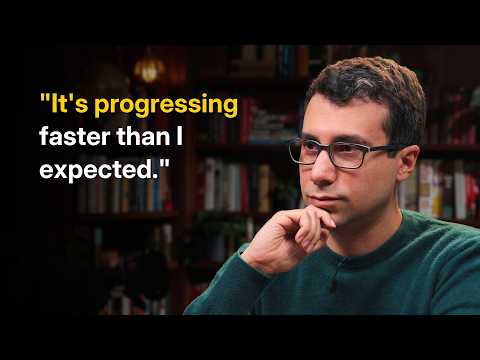
Noam Brown on why the model, not the swarm, did the hard part
OpenAI's Noam Brown explains how many agents scale test-time compute in parallel, why the underlying model deserves the credit for cracking a Millennium Prize Problem, and why aligning these systems is the unsolved problem that worries him most.
 ~50 min
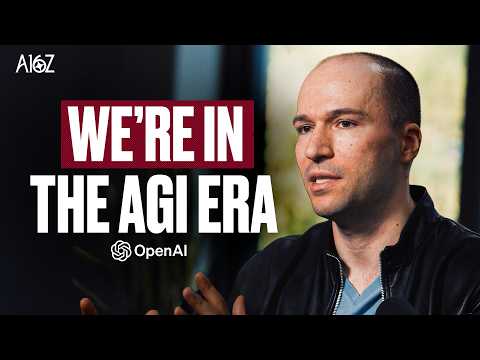
Greg Brockman on the AGI era and pacing the frontier
OpenAI president Greg Brockman argues the AGI era has quietly arrived as a capability, so the hard problem is now pacing it: keeping safety, security, and access ahead of models powerful enough to run for a full day or be deployed ten thousand at a time.
 ~65 min
Mehtaab Sawhney & Mark Sellke on why AI reaches the results humans gave up on
OpenAI's models are producing short, human-like proofs for open math problems, shifting the bottleneck from proving results to understanding and organizing them.
 ~39 min
Sam Altman on why intelligence on tap raises the bar
Altman argues AI agents compress startup execution from months to minutes, raising the ambition bar while making the concentration of power the central safety risk to design against.
 ~71 min
Akshay Nathan on One Shared Harness, Two UX Shells
OpenAI merged Codex's agent power into ChatGPT Work behind one shared harness after non-developers quietly adopted the coding agent, betting that as AI blurs job roles the product should route users rather than box them in.
 ~36 min
Noam Brown on Why Reasoning Models Need Budget Curves — Interview, Explained
Noam Brown argues that reasoning models must be evaluated as budget curves, because more test-time compute can unlock capabilities that static benchmark grids hide.
 ~41 min
Mark Chen on Why You Can't Cheat the Real World
OpenAI's Chief Research Officer explains why he bets on the exponential, grades progress only against metrics that can't be faked, and runs research like a trader's book of high-risk bets.