Interview, Explained
In-depth breakdowns of tech interviews — section-by-section analysis with diagrams, quotes, and insights.
 ~59 min
Steijn Pelle & Frédéric Renken on doing the job before you automate it
The founders of Lassie explain how they built AI agents that autonomously run dental back-offices — by first doing the paperwork by hand, engineering for full autonomy over years, and reaching the Main Street businesses whose only 'incumbent' was a human who quit.
 ~57 min
Jeff Dean on why inference hardware is AI's next bottleneck
At Y Combinator's Startup School 2026, Jeff Dean argues that as models commoditize the writing of code, the leverage moves down to the systems layer — specialized low-latency inference hardware and the energy cost of moving data — and up to the human skill of taste in choosing what to build.
 ~39 min
Sam Altman on why intelligence on tap raises the bar
Altman argues AI agents compress startup execution from months to minutes, raising the ambition bar while making the concentration of power the central safety risk to design against.
 ~71 min
Akshay Nathan on One Shared Harness, Two UX Shells
OpenAI merged Codex's agent power into ChatGPT Work behind one shared harness after non-developers quietly adopted the coding agent, betting that as AI blurs job roles the product should route users rather than box them in.
 ~46 min
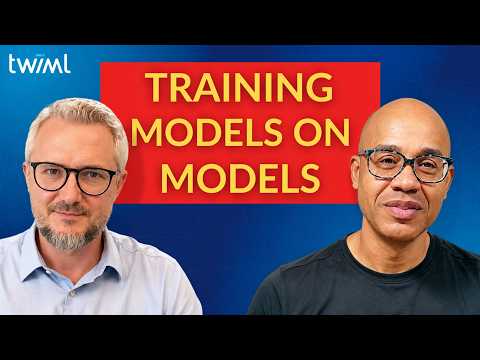
Damian Borth on Training Models From Models, Not Data
St. Gallen's Damian Borth argues the weights of already-trained neural networks are a new data modality you can learn from and generate — letting you train new models from old models instead of scarce data, and one day sample a network on demand.
 ~36 min
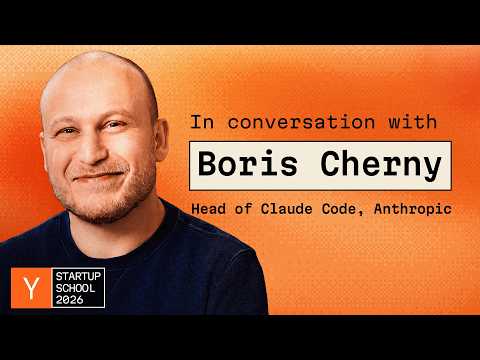
Boris Cherny on treating the model like a living creature
Boris Cherny, creator of Claude Code, argues that building on frontier models is an empirical craft: delete your scaffolding every generation, unhobble capability the product is hiding, and let the model verify its own work while it runs for days.
 ~49 min
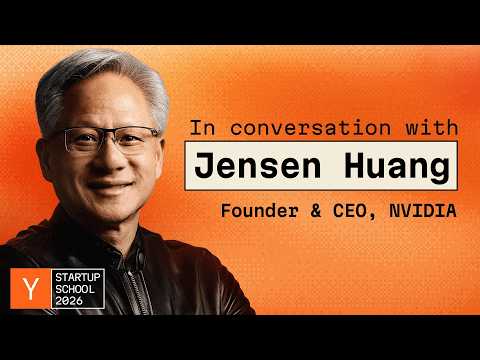
Jensen Huang on why learning is the greatest superpower
At YC Startup School 2026, Jensen Huang argues that Nvidia's founding technology was flat wrong, that the durable edge across 34 years and $5 trillion was never any chip but the willingness to confront what he didn't know and learn it fast.
 ~20 min
Eric Landau on why physical AI is won at the data layer
Encord's Eric Landau explains why physical AI — roughly 80% of the economy — will be won not by cleverer models but by whoever can collect, curate, and evaluate multimodal data at petabyte scale.
 ~44 min
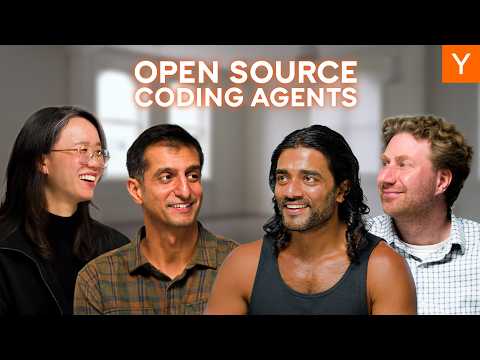
Jay V on Why OpenCode Bets the Whole Field, Not One Model
OpenCode's Jay V explains how a model-neutral, open-source coding agent reached ~13M users and ~7T tokens a day by betting the entire open-weight field and serving the world the frontier labs price out.
 ~22 min
Matthieu Rouif & Eliot Andres on Why Ambition Is a Trainable Skill
PhotoRoom's founders argue that ambition is not a personality trait but a skill you train: reset your benchmark against bolder peers, aim at targets so high they pull the company up to meet them, shrink every experiment to a V0 that AI can now ship in days, and earn scale by going deep on one thing at a time.
 ~14 min
Lisa Su on Why Inference Is AI's Real Inflection Point
AMD's Lisa Su argues AI has crossed from training to inference — the everyday running of models — and that meeting accelerating demand will require abundant compute, open ecosystems, and capacity committed 12 to 24 months ahead.
 ~42 min
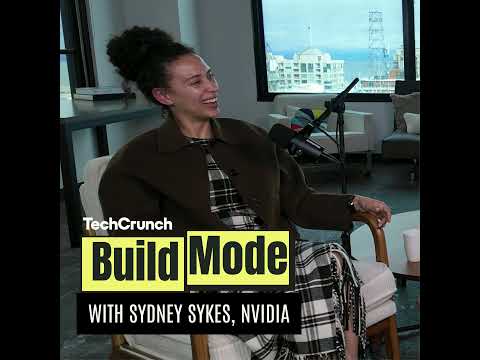
Sydney Sykes on why strategic fit wins partnerships
Sydney Sykes, who runs Nvidia's VC alliances, breaks down how startups win corporate partnerships — by aligning to priorities, not by having the best tech — and how founders should build a cap table of realists and dreamers.