Interview, Explained
In-depth breakdowns of tech interviews — section-by-section analysis with diagrams, quotes, and insights.
 ~42 min
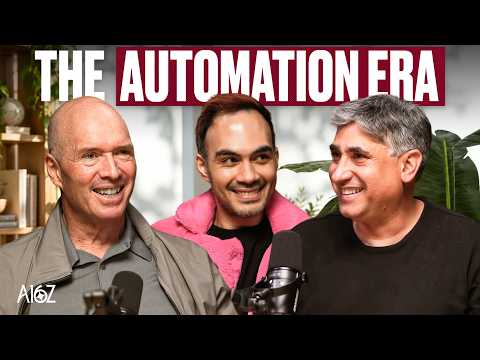
Diogo Almeida on why AI belongs inside software, not writing it
TypeSafe's Diogo Almeida argues that AI has stalled on real automation because we keep making it write software for humans to read, and that the fix is Jev, a reliable classifier you drop inside programs so software itself can make smart decisions.
 ~6 min
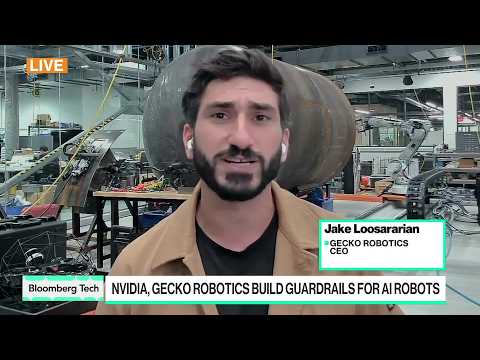
Jake Loosararian on keeping humans in control of physical AI
Gecko Robotics CEO Jake Loosararian argues that physical-AI robots earn a place in defense and industry only when a human-set boundary and a watching guard travel with them - the two layers of NVIDIA's new open agent-safety platform, now running on Gecko's Komodo robot.
 ~30 min
Waddle Labs & RoboCurve on Why One LLM Can Run Any Robot
Two frontier startups argue that the fastest path to capable robots is not a robotics-specific model but one strong general-purpose LLM that writes code and calls tools to control any robot, fed with data-rich modalities like coding and computer use.
 ~5 min
Gregory Allen on the U.S.–China AI Story the Headlines Miss
Gregory Allen argues the real U.S.–China AI story is below the surface: both governments' agencies treat frontier risk more seriously than their leaders admit, while U.S. compute keeps extending its lead over China's headline chip progress.
 ~5 min
Ed Jennings on why AI agents are the new insider threat
Darktrace CEO Ed Jennings argues that AI agents behave like a new kind of insider threat, so the fix is not to slow adoption but to watch what agents actually do in real time and build security into models from the start.
 ~43 min
Michael Lee on why AI can crown the re-founded incumbent
Michael Lee argues that in the industries where incumbents hold structural advantages, AI's biggest winner will be a re-founded incumbent, not a startup, and that owning the business, celebrating the engineer, and redrawing how people work is what turns that moat into a lasting lead.
 ~31 min
Mike Schroepfer on AI's energy crunch as an economics problem
Former Meta CTO Mike Schroepfer argues AI's energy crunch is an economics problem, not a physical limit -- and lays out the untapped headroom, from wave-powered inference buoys to fusion, that could keep supply ahead of demand.
 ~47 min
Amjad Masad on why young people should be heretics
In a conversation about reinventing college for the AI era, Amjad Masad argues that the real job of young people is to question deeply held beliefs — and that how we learn, build, and start companies all have to change to protect that.
 ~92 min
Eric Nguyen on why the model that writes DNA must also guard it
Radical Numerics' new Omni model shows DNA language models can now beat specialized tools at predicting disease-causing mutations, and Eric Nguyen argues the same generative models must be turned into sequence-level biosecurity defenses.
 ~60 min
Neal Mohan on Why the Audience, Not AI, Runs YouTube
YouTube's CEO argues AI is the stage, not the star: the algorithm is really the audience voting, the line worth policing is quality over slop, and the moat is human storytelling that AI can't fake.
 ~43 min
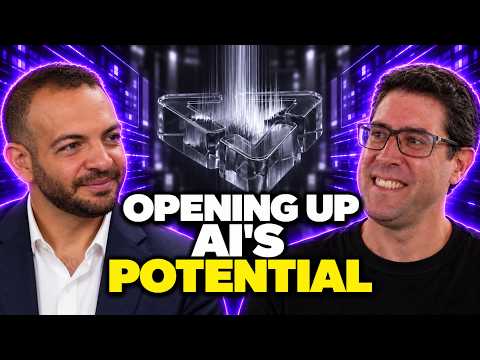
Renen Hallak on why your IP is becoming model weights
VAST Data's Renen Hallak argues that as company value shifts from people and data to model weights, trust has to move from promises to math: encrypt the weights, run inference on-prem, and confidential computing can unlock the enterprise data AI has not touched yet.
 ~10 min
Fei-Fei Li on Why World Models Generate Worlds, Not Words
Fei-Fei Li argues the next AI substrate is spatial intelligence — world models that generate navigable 3D worlds instead of words — and that the harder questions of safety, benchmarking, and governance are human problems to be solved at the ecosystem level, not left to any single lab or to fatalism.