Interview, Explained
In-depth breakdowns of tech interviews — section-by-section analysis with diagrams, quotes, and insights.
 ~49 min
Andy Fang & Stanley Tang on Why DoorDash's Moat Is the Real World
DoorDash's co-founders explain why they treat the company as an AI and robotics operator, building a custom delivery robot and a natural-language ordering agent from the customer's use case backward and defending it with ten billion deliveries of real-world data.
 ~23 min
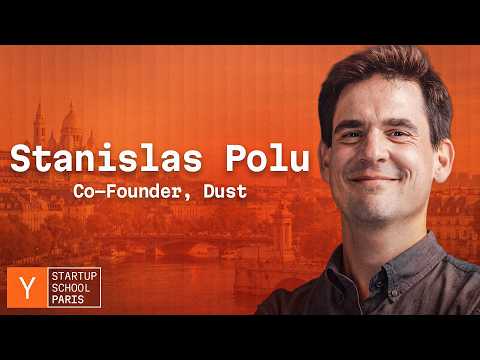
Stanislas Polu on Why No Single AI Lab Will Win
Dust co-founder Stanislas Polu argues the durable AI company is the one that never bets on a single frontier lab — staying model-agnostic, horizontal, and defended by network effects rather than scaffolding.
 ~92 min
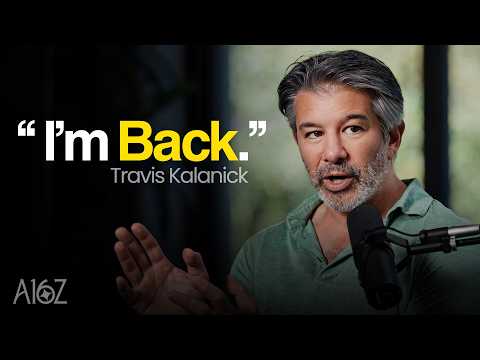
Travis Kalanick on why every industry is a computer
Travis Kalanick lays out the framework behind his stealth comeback, Atoms: every physical industry is a computer whose three resources are manufacturing (the CPU), real estate (the storage), and transport (the network), and he is building those computers one industry at a time, starting with food, mining, and freight.
 ~32 min
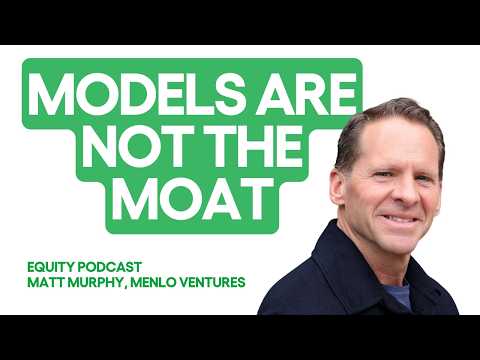
Matt Murphy on why Anthropic's harness beat the model
Menlo's Matt Murphy explains Anthropic's stunning revenue leap as less about model quality than the harness around it — Claude Code, MCP, and Skills — plus a VC willing to pay outcome-level prices to back the inevitable strong number two, in a wave that spreads product-led with almost no friction.
 ~15 min
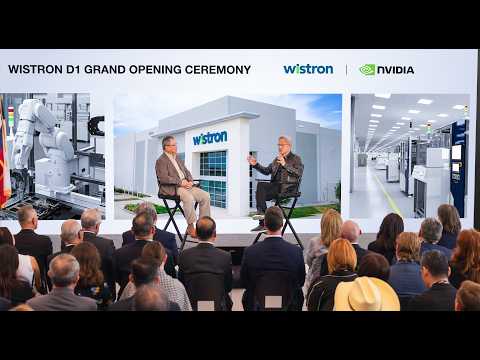
Jensen Huang on the Factory That Turns Electricity Into Intelligence
In a fireside chat at Wistron's U.S. plant, Jensen Huang recasts data centers as AI factories that turn electricity into intelligence tokens, argues this new industrial layer will become as fundamental to society as agriculture and railroads, and ties it to reindustrializing American manufacturing.
 ~80 min
Qasar Younis & Peter Ludwig on Why Physical AI's Moat Is the Real World
Applied Intuition's cofounders argue physical AI's real bottleneck is never model access but the friction of the physical world — data you must go collect, safety you must prove, latency you must beat — and that friction is exactly what becomes the moat.
 ~90 min
Bo Wang & Ci Chu on why virtual cells need causal data, not atlases
Xaira's virtual-cell leads on why the bottleneck to predicting biology isn't the model but the data — and how industrializing CRISPR perturbation screens into causal datasets let a diffusion model predict how cells respond to genes it has never seen.
 ~18 min
AMD's Helios Bets the AI Market Is Too Big to Be Nvidia's Alone
AMD unveils Helios, its first rack-scale AI system, as an open, full-stack challenge to Nvidia, betting that a market Nvidia controls more than 95% of is expanding fast enough for a real second source to win.
 ~13 min
Kai-Fu Lee on Why the Money Is Above the Model
Kai-Fu Lee argues that as models grow smarter than all humans and open source narrows the gap, the value in AI moves off the model and onto applications that change a company's bottom line, and 01.AI is betting on hands-on enterprise deployment in markets its US rivals are unlikely to enter.
 ~54 min
Bret Taylor on why you'll stop paying per token
OpenAI chairman and Sierra CEO Bret Taylor argues that as frontier intelligence becomes a rented commodity, enterprises should stop paying per token and start paying for outcomes — and build their moat on customer relationships, not models.
 ~74 min
Ankit & Francois on Why AGI Needs a World Model, Not More Data
World models — learning to predict the next state of the world — may be the route to sample-efficient AI, especially in robotics where brute-force reinforcement learning is intractable.
 ~26 min
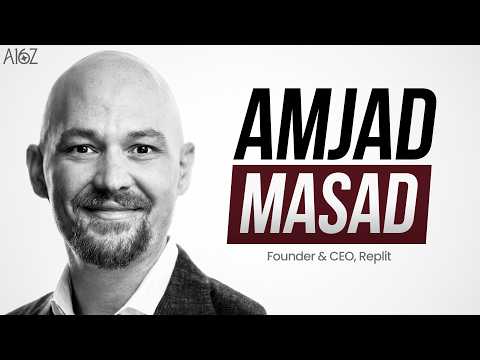
Amjad Masad on the story that kept Replit alive
Replit's CEO on how founder-led storytelling — going direct, building in public, and refusing to get canceled — kept the company alive years before the product caught up.