Interview, Explained
In-depth breakdowns of tech interviews — section-by-section analysis with diagrams, quotes, and insights.
 ~84 min
Anima Anandkumar on Why AI for Science Isn't Just Language Models
Caltech's Anima Anandkumar argues that AI for science has to model the physical world directly, not just describe it in words: her neural operators fold data and physics together to approach the accuracy of supercomputer weather forecasts tens of thousands of times faster on a single GPU, and point toward foundation models that don't just simulate but discover.
 ~10 min
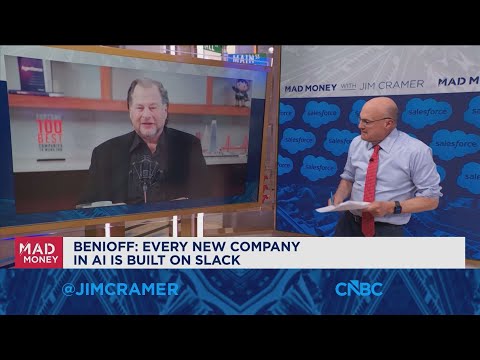
Marc Benioff on why AI runs on Salesforce, not against it
Salesforce CEO Marc Benioff answers the 'SaaS is dead' narrative with one reframe: AI runs on the CRM rather than replacing it. Agentic use surged six times, nine of the ten top AI companies are paying customers, and the data-and-semantic layer beneath the apps is what the models actually depend on.
 ~55 min
Mike Lewis on the non-technical builder AI teams overlook
AI adoption isn't a ladder to climb; the payoff comes from finding the one person who understands the work cold and letting them build tools that make the real problem vanish, measurably.
 ~71 min
Joon Sung Park on simulating imperfect people to shape the future
Stanford's generative-agents author Joon Sung Park explains why his company Simile models real, imperfect people rather than idealized reasoners — from a validated 1,000-person study toward the vision of simulating all 8 billion of us.
 ~32 min
Michael Miebach on Why AI Agents Won't Reinvent Payments
Mastercard's CEO argues agentic commerce won't need a new payment system: AI agents will be vetted and accredited like any cardholder and ride the existing rails, because the real product Mastercard sells is trust.
 ~31 min
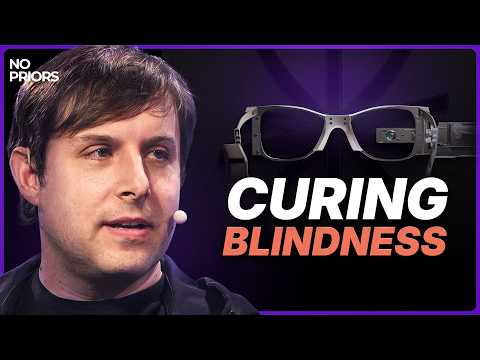
Max Hodak on why the brain is literally a computer
Max Hodak, who left Neuralink to found Science, argues the brain is literally a computer, and that treating it as one is how his team restored form vision to blind patients and how he plans to make the body's fragility optional.
 ~59 min
Nick Bostrom on moderate fatalism and the case to build AI anyway
AI philosopher Nick Bostrom argues that autonomous agents make old AI-risk pathways concrete, that bio is the domain where defense may lose, and that the outcome may be partly baked in, yet he stays a fretful optimist: align a weak system to reach a stronger one, pause late rather than early, and start taking the ethics of possibly-conscious models seriously now.
 ~31 min
Steve Hou on how GPU rentals become a Wall Street commodity
Silicon Data's head of research explains how GPU rentals are becoming a cash-settled Wall Street commodity, why that liquidity could unlock even more AI buildout, and how the price data cuts against the chip-depreciation doom narrative.
 ~54 min
Rich Sutton & Khurram Javed on why AI must never stop learning
Reinforcement-learning pioneer Rich Sutton and his Oak co-founder Khurram Javed argue that today's LLMs stop learning the moment training ends, and that real intelligence requires continual learning from an infinitely complex world.
 ~40 min
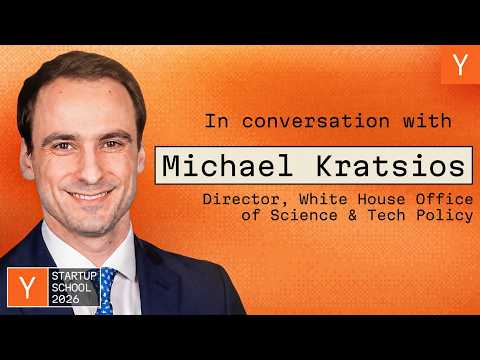
Michael Kratsios on Why AI Rules Shouldn't Be Set in Stone
The White House's top science and tech advisor argues that in a field reinventing itself every six months, U.S. AI policy should back both open and closed models, avoid firm rules that age out, and keep the lane clear for startups over incumbents.
 ~54 min
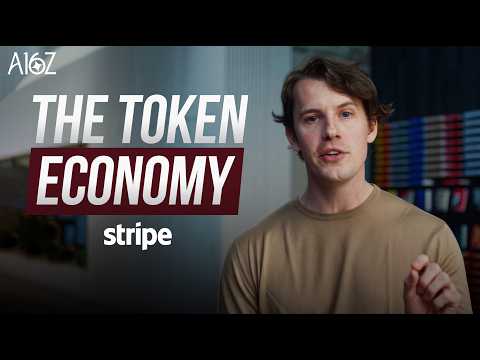
Will Gaybrick on why AI means build everything, not fewer people
Stripe's Will Gaybrick argues AI is an expansion event, not an efficiency one: internal one-shot agents now write about 30% of Stripe's pull requests, teams are getting flatter, and the same abundance is reshaping agentic commerce, stablecoins, and the blurring line between tokens and dollars.
 ~47 min
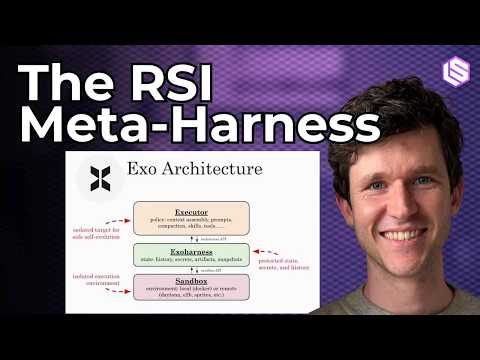
Alex Krentsel on Why the Harness, Not the Weights, Is the Next Frontier
Alex Krentsel argues the next leap in AI comes not from bigger model weights but from agent harnesses that read, edit, and rebuild their own code at runtime, and explains why that recursive self-improvement is finally possible now that an agent is just a few thousand lines of code.