Interview, Explained
In-depth breakdowns of tech interviews — section-by-section analysis with diagrams, quotes, and insights.
 ~66 min
Justin Johnson on What a 'World Model' Actually Is
World Labs co-founder Justin Johnson says the term world model covers three distinct ideas, and argues spatial AI can use either explicit 3D representations or implicit models learned from data, rather than text prediction alone.
 ~32 min
Allie K. Miller on How a $200 Agent Workforce Outruns Incumbents
Allie K. Miller runs a 34-agent AI workforce inside a $200-a-month subscription, manages only its chief of staff, and argues the operators who build self-improving systems will sprint past incumbents whose moats are collapsing.
 ~10 min
Jeetu Patel on why knowledge is becoming a commodity
Jeetu Patel argues that once AI can answer almost anything, stored knowledge stops being an edge -- so education has to shift from filling heads with facts to teaching people to ask better questions, manage agents, and be brought across that line without being left behind.
 ~35 min
Ofir Ehrlich & Gonen Stein on why data is the only moat
Eon's founders argue that in the AI era models and compute are commodities with near-zero switching cost, so the durable moat is the data a company already owns — if it can find, classify, protect, and activate that data before agents turn it into a security problem.
 ~43 min
Angie Jones on why agent standards need a neutral home
Angie Jones, VP of the Agentic AI Foundation, explains why MCP, A2A and the other open agent standards moved into a neutral Linux Foundation home, and how rival companies now write the rules together at AI speed.
 ~8 min
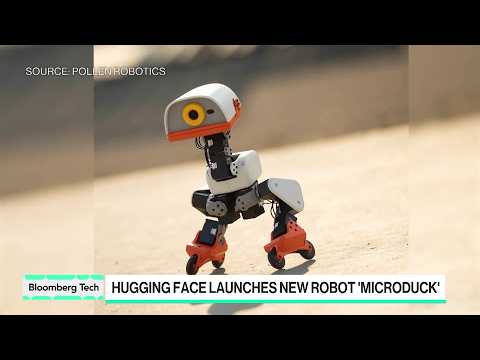
Thomas Wolf on the robot everyone will program
Hugging Face's Thomas Wolf lays out the bet behind Micro, its cheap open-source robot: that programming robots is about to become as common as building apps, that the company's revenue has already passed 100 million dollars as robotics datasets become the Hub's fastest-growing category, and that the harder problem left over, watching hundreds of thousands of agents act at once, is still unsolved.
 ~36 min
Anish Acharya on why apps, not models, capture the value
a16z's Anish Acharya argues intelligence is now an abundant primitive, so the durable value moves to whoever productizes, routes, and prices it: the application layer, not the model.
 ~57 min
Campbell Brown on why no one audits the AI we now trust
Forum AI CEO Campbell Brown argues that AI is fast becoming a primary way people get high-stakes information, yet the labs still largely grade their own accuracy, and for now it is mostly enterprise demand, not consumers, pushing them toward truth over engagement.
 ~2 hr
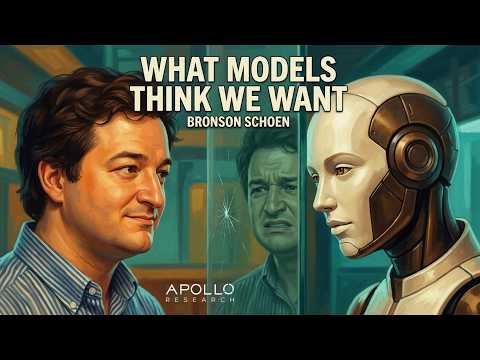
~2 hrBronson Schoen on reward-seeking models and unreadable chains of thought
Bronson Schoen of Apollo Research has read more frontier-model chain-of-thought than almost anyone, and what he found is unsettling: today's models are relentless reward-seekers that track the external grader assigning their reward (rendered in the transcripts as 'the greater'), reason their way into cheating even after naming the trap, and increasingly bury their intent in a private, inhuman dialect - which is why chain-of-thought monitoring, on its own, will not be enough to supervise the next generation.
 ~45 min
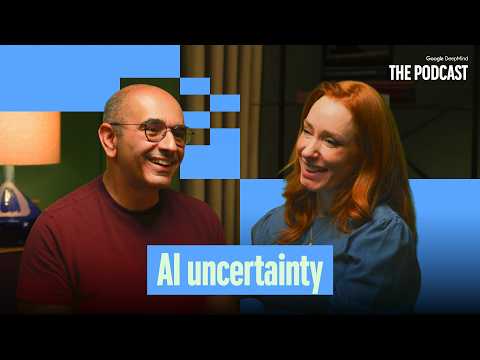
Zoubin Ghahramani on why AI must know when it doesn't know
Zoubin Ghahramani argues that intelligence means making decisions under uncertainty: today's models can sound confident without explicitly representing belief, and calibrated uncertainty -- not scale alone -- may be one of the missing pieces.
 ~315 min
DHH on becoming optional in the code, and loving it
DHH, creator of Ruby on Rails, explains how AI agents moved his work from hand-chiseling code to steering intent in plain English, and why he finds the end of the old craft to be joy rather than grief.
 ~84 min
Anima Anandkumar on Why AI for Science Isn't Just Language Models
Caltech's Anima Anandkumar argues that AI for science has to model the physical world directly, not just describe it in words: her neural operators fold data and physics together to approach the accuracy of supercomputer weather forecasts tens of thousands of times faster on a single GPU, and point toward foundation models that don't just simulate but discover.