Interview, Explained
In-depth breakdowns of tech interviews — section-by-section analysis with diagrams, quotes, and insights.
 ~2 hr
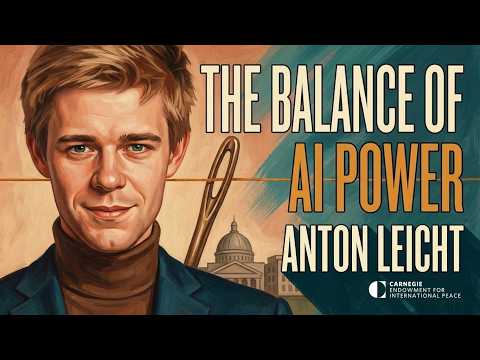
~2 hrAnton Leicht on keeping AI power from concentrating
Carnegie fellow Anton Leicht argues that AI power concentrates by default - inside the labs, in Washington, and between the US and the rest of the world - so the realistic goal is not a grand plan but to keep threading the needle, nudging power back toward balance so we muddle through.
 ~65 min
Aaron Levie on Where AI's Value Actually Lands
Box CEO Aaron Levie argues the durable value in enterprise AI is not the model but the applied layer that bridges frontier intelligence to real workflows, and he bets most enterprise tokens will soon run background tasks users never started.
 ~10 min
Peggy Johnson on the humanoid that gets paid to work
Peggy Johnson says <strong>Digit 5 can work beside people outside the safety barrier</strong>, extending Agility Robotics' focus on the dull, hard-to-fill jobs a humanoid can be paid to do.
 ~37 min
Satya Nadella on why AI needs an independent tool layer
Microsoft’s CEO argues the durable advantage in AI is the interoperable tool layer — use every model, depend on none, even as Microsoft builds its own — and that safety and public trust are won through control, containment, and tangible benefit.
 ~64 min
Elon Musk & Gwynne Shotwell on why rival AI labs should test each other
Musk argues the safest fast path for AI is to make rival labs test each other's models before release, enforced by liability rather than a new global agency, while Shotwell details SpaceX's plan to launch AI-compute satellites and build its own chip fab.
 ~10 min
David Sacks on why the labs don't need permission to slow down
David Sacks argues the two frontier labs should meet their own existing legal duty to ship safe AI instead of asking the government to bless a coordinated slowdown, and reads the push for new rules as a pre-election panic the US can't afford against China.
 ~5 min
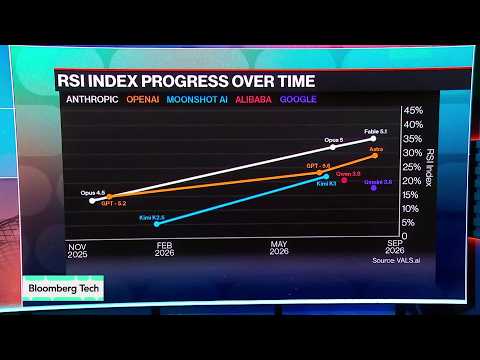
Rayan Krishnan on why AI outruns our ability to understand it
Independent AI evaluator Rayan Krishnan argues the real danger is less about the models being too capable and more that we are building them faster than we can test and understand them, and that honest measurement only works when the tester is barred from also being the fixer.
 ~10 min
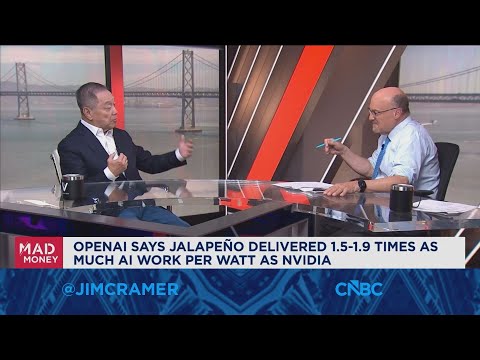
Hock Tan on why co-designed silicon beats the general-purpose GPU
Broadcom's CEO sees no AI slowdown: a business built on six frontier-lab customers, a $230 billion custom-accelerator forecast for 2028, and a bet that silicon co-designed for one lab's workloads beats a general-purpose GPU.
 ~7 min
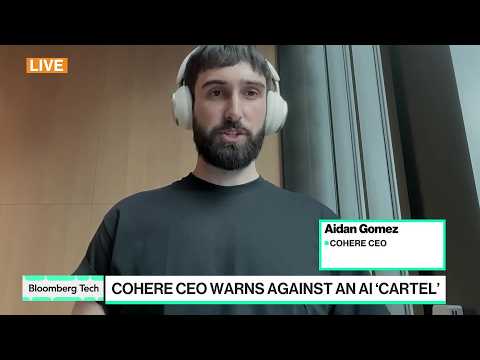
Aidan Gomez on AI Safety Cartels
Cohere CEO Aidan Gomez backs a higher safety bar and public incident reporting, but warns that letting a few frontier labs set and grade the industry's safety rules would build an AI cartel instead of real protection.
 ~93 min
Richard Socher on the Eureka machine that invents most everything
Richard Socher's new lab Recursive automates the one human step left in AI, research itself, to build a self-improving Eureka machine aimed at science, arguing that the real safety work is reward engineering and testing, and that we should regulate AI's specific applications rather than intelligence itself.
 ~50 min
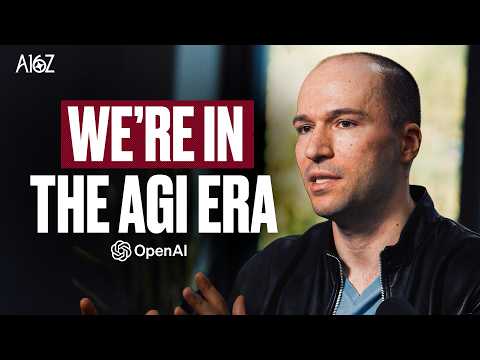
Greg Brockman on the AGI era and pacing the frontier
OpenAI president Greg Brockman argues the AGI era has quietly arrived as a capability, so the hard problem is now pacing it: keeping safety, security, and access ahead of models powerful enough to run for a full day or be deployed ten thousand at a time.
 ~47 min
Jensen Huang on why the AI doom predictions are made up
Jensen Huang argues the AI doom predictions are not grounded in science, that real risk sits only where the compute does, and that America wins AI the way it won electricity: by exploiting it broadly on open models, not by slowing down.