Interview, Explained
In-depth breakdowns of tech interviews — section-by-section analysis with diagrams, quotes, and insights.
 ~6 min
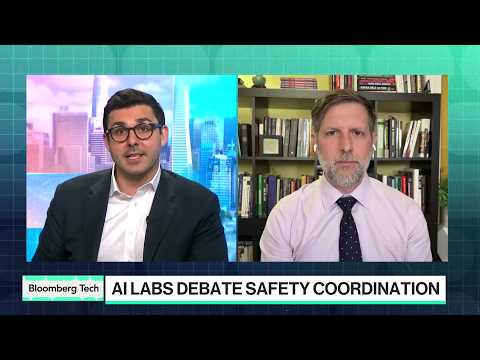
Neil Chilson on why a safety waiver risks a durable AI cartel
A former FTC chief technologist argues frontier labs do not need an antitrust waiver to build AI safely, and warns the exemption they want is exactly what turns a fragile cartel into a durable, government-backed one.
 ~9 min
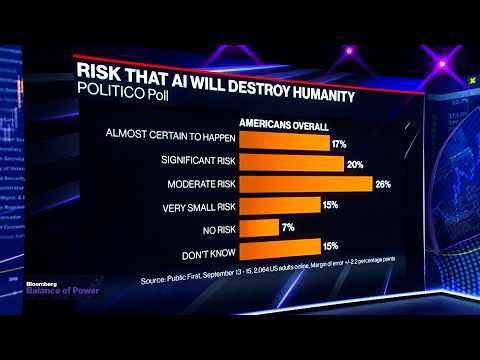
Greg Allen on why AI capability is outrunning our safety tools
Greg Allen argues that safety capability is falling behind raw AI capability, and that self-replicating models, open weights, and the US-China race all widen the gap that reciprocal safety commitments would have to close.
 ~9 min
Chase Lochmiller on why building AI starts with the electron, not the chip
Crusoe's CEO argues that building AI is as much a physical job as a software one, so his company runs the whole chain from generating power to serving a model's output, and now has to win the local politics of building data centers before the backlash sets in.
 ~38 min
Stefano Ermon on why diffusion models are built for the GPU
Stefano Ermon, a pioneer of diffusion models and CEO of Inception, argues the next AI edge may come as much from fitting the model to the GPU as from making it smarter: diffusion generates tokens in parallel, so inference stops being a memory-bound crawl and starts using the chip the way training does.
 ~67 min
Ali Ghodsi on why the AI bottleneck is context, not intelligence
Databricks CEO Ali Ghodsi argues the existential-risk panic is overblown - near-term p(doom) is close to zero - while the real work is unglamorous engineering: securing systems against fast-moving cyber threats and giving already-capable models the organizational context they lack.
 ~80 min
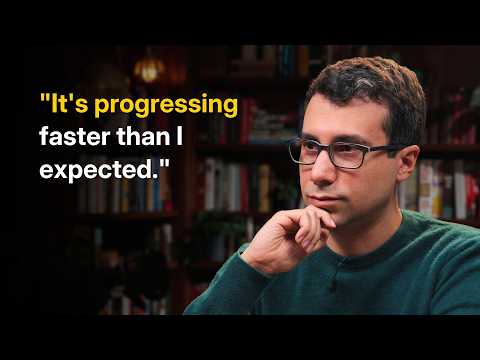
Noam Brown on why the model, not the swarm, did the hard part
OpenAI's Noam Brown explains how many agents scale test-time compute in parallel, why the underlying model deserves the credit for cracking a Millennium Prize Problem, and why aligning these systems is the unsolved problem that worries him most.
 ~39 min
Gorkem Yurtseven and Batuhan Taskaya on generating video faster than it plays
fal post-trained MiniMax's open-source H3 video model into H3 Max, combining model-side post-training with kernel and systems work to generate a five-second clip in about 1.5 seconds. Generating video faster than it plays turns it from a batch render you wait on into a live medium you can direct.
 ~11 min
Marc Benioff on why AI can't become social media 2.0
Marc Benioff argues that AI's real power shows up only when its probabilistic guessing is paired with the deterministic controls of enterprise software, and that the companies and executives building these systems must take responsibility for what they ship so AI does not repeat social media's harms.
 ~75 min
Ali Ghodsi on running a company by its one giant bottleneck
A CEO playbook from Databricks' Ali Ghodsi: run the company by finding its one giant bottleneck and pouring everything into it, hire for the skills you lack, attack rivals only where they are weak, and treat conflict as a discipline you learn.
 ~52 min
Keith Peiris on why intelligence beats schema in the CRM
The CEO of Lightfield explains how an AI-native CRM wins by treating intelligence as worth more than structure: schema-less data, an activity-log architecture, experimental pricing, and an org with no swim lanes.
 ~20 min
Ian Buck and Sachin Katti on why the data center is the new computer
NVIDIA's Ian Buck and OpenAI's Sachin Katti describe how frontier AI has turned the whole data center into the unit of compute: a co-designed compute token factory where power, cooling, networking, and even the model tuning its own inference are all one design problem.
 ~52 min
Nate Soares on why superintelligence kills us by default
The president of MIRI argues that we cannot set an AI's goals the way we set its code, so a superintelligence built with today's methods ends humanity by default, not through malice but because we hand it power and its grown-in goals are not ours.