Interview, Explained
In-depth breakdowns of tech interviews — section-by-section analysis with diagrams, quotes, and insights.
 ~31 min
Eve Bouffard on Why Imagination Is Now the Bottleneck
YC's head of design walks through an AI-native workflow — voice instead of typing, a soul.md source of truth, disposable tools, and reusable coded assets — where creativity and imagination set the limit.
 ~30 min
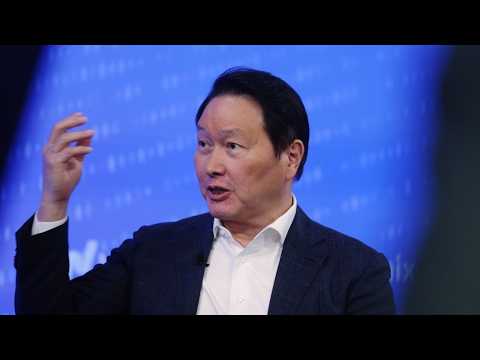
Chey Tae-won on why AI turns memory demand exponential
SK Group's chairman argues the AI era rewired memory demand — from a boom-bust commodity indexed to device counts into the structural bottleneck of inference, where every agent's KV cache has to live somewhere.
 ~61 min
Aravind Srinivas on why the harness — not the model — is the product
Perplexity CEO Aravind Srinivas argues the AI product is no longer the model but the harness around it: open-weight orchestrators that route to a frontier model only when a task needs it, run cheaply per watt on hardware you own, over proprietary data you keep.
 ~53 min
Neel Nanda on why AI is grown, not designed
Neel Nanda, who leads language-model interpretability at Google DeepMind, explains that modern AI is grown rather than designed, and that reading its mind takes a growing toolkit of cheap, imperfect techniques — no single one a silver bullet.
 ~37 min
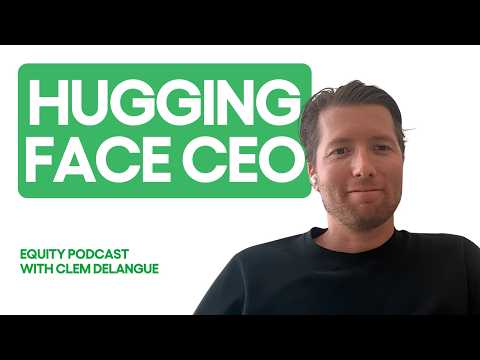
Clem Delangue on why open source is the check on AI monopoly
The Hugging Face CEO argues that companies abandon frontier APIs for open and private models once production costs bite, and that keeping AI open is a critical check on a dangerous concentration of power.
 ~41 min
Glenn Fogel on why there's no such thing as a moat
The CEO of Booking Holdings — a dot-com survivor who grew Priceline roughly a thousandfold — argues that no moat protects you from AI, so the only defense is relentlessly reinventing what you do for the customer, judged by hard ROI rather than UI novelty.
 ~7 min
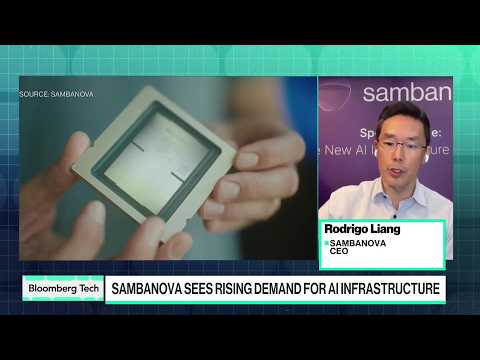
Rodrigo Liang on why inference broke everything open
SambaNova's CEO argues that inference has broken the AI market open, and that a challenger can win it by out-flanking NVIDIA on decode throughput, power per rack, mature-HBM supply, and on-prem enterprise data rather than bidding for the newest memory.
 ~32 min
Eddie Kim on why agents shouldn't start from a blank canvas
Gusto's co-founder built an AI business partner for small businesses by starting from the recurring tasks they already do — not an open-ended prompt — routing exact jobs like payroll to deterministic crons, and shipping the whole thing with five people in ten weeks.
 ~59 min
Alex Wiltschko on Smell, AI's Missing Modality
Osmo's Alex Wiltschko explains how a graph neural network finally gave computers a map for smell — turning molecular structure into odor, proving it against a human panel, and using the fragrance business to fund a chemical foundation model.
 ~26 min
Pim de Witte on Why Games Are Physical AI's Missing Dataset
General Intuition's Pim de Witte argues the next leap in AI isn't more text but world models trained on the one dataset that already encodes space, time, and action: hundreds of millions of hours of gameplay.
 ~59 min
Akshat Bubna on why agent experience is the new developer experience
Modal's CTO Akshat Bubna on why the infrastructure that made developers productive is exactly what AI agents need, why a single RL run can fan out to 100,000 sandboxes, and how a capital-light super-cloud with no data centers plans to serve it.
 ~30 min
Gilad Shainer on why the AI factory needs four networks, not one
NVIDIA's networking chief argues an AI factory needs four purpose-built networks — not off-the-shelf Ethernet — to turn a datacenter full of GPUs into a single supercomputer.