Interview, Explained
In-depth breakdowns of tech interviews — section-by-section analysis with diagrams, quotes, and insights.
 ~54 min
Bret Taylor on why you'll stop paying per token
OpenAI chairman and Sierra CEO Bret Taylor argues that as frontier intelligence becomes a rented commodity, enterprises should stop paying per token and start paying for outcomes — and build their moat on customer relationships, not models.
 ~74 min
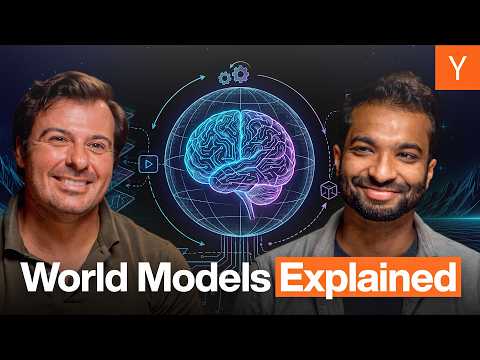
Ankit & Francois on Why AGI Needs a World Model, Not More Data
World models — learning to predict the next state of the world — may be the route to sample-efficient AI, especially in robotics where brute-force reinforcement learning is intractable.
 ~26 min
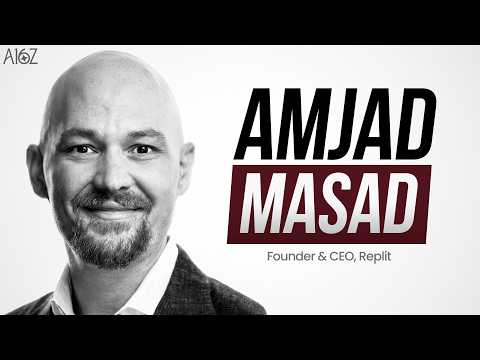
Amjad Masad on the story that kept Replit alive
Replit's CEO on how founder-led storytelling — going direct, building in public, and refusing to get canceled — kept the company alive years before the product caught up.
 ~101 min
Lila Sciences Is Turning the Lab Into an Infinite Token Generator
Lila Sciences applies the bitter lesson to science: a general reasoning model proposes hypotheses, a flexible automated lab runs the experiments, and nature verifies the results, turning experiments into the next internet-scale dataset while making the model itself the product.
 ~41 min
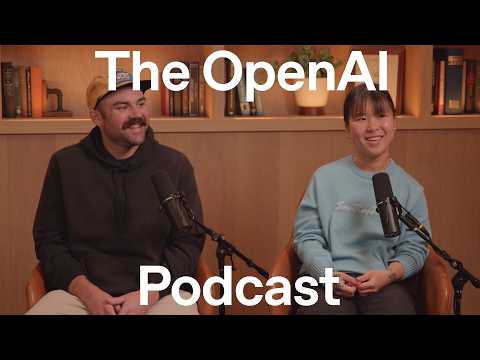
Joyce Ruffell & Chase Holden on why racing's data wars reward the organizer
An OpenAI researcher and a racing-software founder describe a sport drowning in data, where AI earns its keep by making the softer, unstructured material usable alongside the telemetry — and where the edge still lands on the human who knows what to ask for.
 ~35 min
Andrew Dai on the Jagged Frontier That Left Vision Behind
Andrew Dai argues AI's progress is a jagged frontier — really strong at math, coding and Go, still poor at counting the glasses on a table — and he raised $55 million to post-train that gap.
 ~27 min
NVIDIA Engineers on Why Agents Scaled Only After They Got a Sandbox
Two NVIDIA engineers walk through the AI factory they built for themselves — a slow, long-lived stack underneath, a workload layer that churns on top, and a secure workspace in between that finally let agents run unattended, while internal demand grew to four trillion tokens a month.
 ~31 min
Chris Taylor & Eddie Siegel on why four people can transform a business
The founders of Ode (with Anthropic) argue enterprise AI wins when a tiny team of elite generalists rewires real workflows — disciplined by evals every few days and a hard 3-to-6-month ROI clock — because the scarce ingredient was never the model, it's the applied-AI team that turns capability into an outcome.
 ~135 min
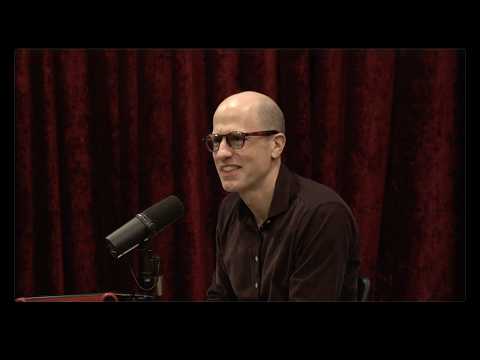
Nick Bostrom on Why the Intelligence Explosion Must Be Steered, Not Stopped
Philosopher Nick Bostrom tells Joe Rogan that superintelligence may arrive within a few years, that the hard part is steering it — technically and politically — rather than stopping it, and that if we get it right the deepest questions won't be about survival but about what humans become and where they find meaning.
 ~19 min
Joe Lonsdale on why AI rewards speed and creative destruction
Investor Joe Lonsdale reads AI as a time-compressing, price-resetting industrial revolution, and argues the returns go to whoever moves fastest and tears down slow incumbents — from the FDA to the defense primes.
 ~50 min
Dan Biderman on why AI needs a nervous system, not just notes
Dan Biderman argues that long context and RAG alone can't give enterprise AI durable memory — context rot and the KV-cache make memory a systems problem — so models need compact knowledge trained into weights alongside text, not just longer context.
 ~49 min
Danielle Perszyk on why reliable agents must model your mind
A cognitive scientist at Amazon's AGI Lab argues intelligence is fundamentally social, so the path to reliable agents isn't better button-clicking but AI that models your mind, aligns its representations with yours, and widens rather than narrows human thought.