Interview, Explained
In-depth breakdowns of tech interviews — section-by-section analysis with diagrams, quotes, and insights.
 ~54 min
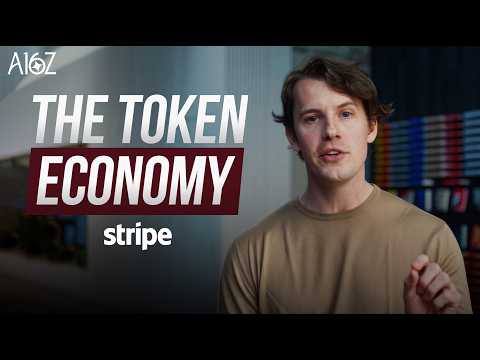
Will Gaybrick on why AI means build everything, not fewer people
Stripe's Will Gaybrick argues AI is an expansion event, not an efficiency one: internal one-shot agents now write about 30% of Stripe's pull requests, teams are getting flatter, and the same abundance is reshaping agentic commerce, stablecoins, and the blurring line between tokens and dollars.
 ~47 min
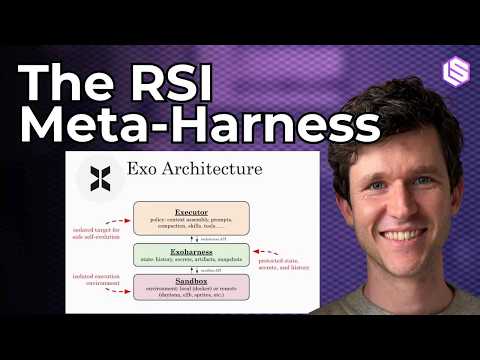
Alex Krentsel on Why the Harness, Not the Weights, Is the Next Frontier
Alex Krentsel argues the next leap in AI comes not from bigger model weights but from agent harnesses that read, edit, and rebuild their own code at runtime, and explains why that recursive self-improvement is finally possible now that an agent is just a few thousand lines of code.
 ~55 min
Travis Kalanick on Why Physical Industries Become Atoms-Based Computers
Travis Kalanick maps the physical world onto computing — manufacturing, real estate, and logistics as the CPU, storage, and network of “atoms-based computers” — and argues food, mining, and transport are trillion-dollar industries about to be automated in a second industrial revolution.
 ~44 min
McCall & Schmidt on Sales: Execution Beats the Playbook
Two a16z go-to-market partners lay out the two enterprise sales playbooks for AI startups — win a few marquee lighthouse logos where proof travels, or land-grab the mid-market on ROI math — and argue which one you pick matters far less than how fast you execute it.
 ~46 min
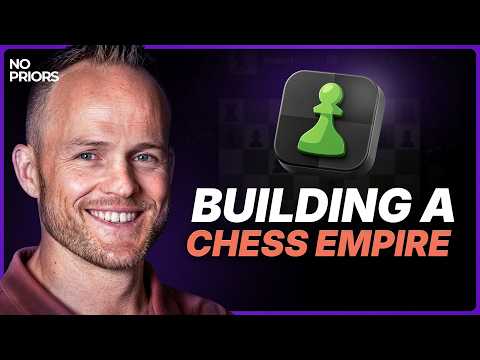
Erik Allebest on chess thriving after machines beat it
Chess.com's founder bootstrapped a roughly $200M business from a domain investors dismissed as uninvestable, and argues that superhuman machines make people value human skill more, not less.
 ~29 min
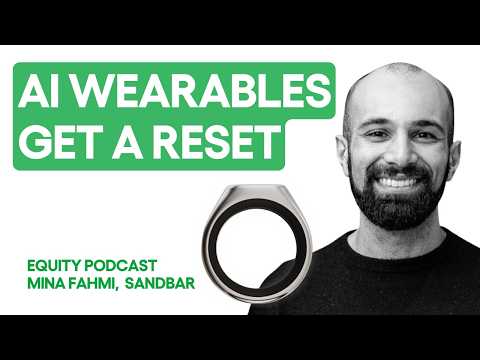
Mina Fahmi on wearables that extend you, not replace you
Sandbar CEO Mina Fahmi argues the wave of always-on AI wearables gets the relationship backwards: his Stream voice ring is push-to-talk by design, because a device only earns a place on your body when it feels like a controllable extension of you rather than a passive recorder listening in.
 ~56 min
Fatih Porikli on making image models precise, not just plausible
Qualcomm's Fatih Porikli argues that image generation's next frontier isn't a bigger model but smarter decomposition: reward the right objective, split planning from rendering, route to specialists, and tile the work in latent space so precise, high-resolution images run on a phone.
 ~51 min
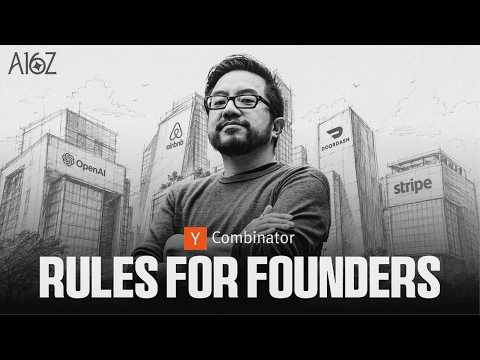
Garry Tan on why a markdown file is now an employee
Garry Tan argues agentic coding rewrites startup economics: a skill file becomes a tireless employee, one operator can outwork a department, and a world built for memory-limited humans is suddenly up for grabs — just slower than the hype suggests.
 ~15 min
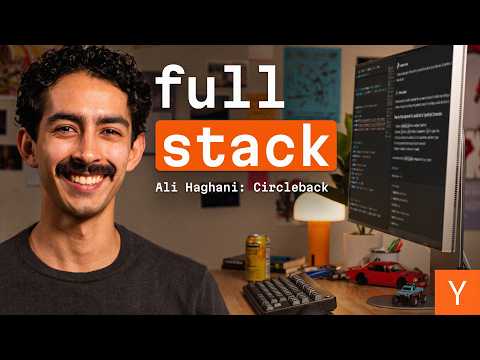
Ali Haghani on why AI agents need a company brain
Circleback's co-founder argues that as AI agents do more work, conversation context becomes scarce infrastructure: capture broadly, share it only with the right people, and reserve consequential judgment for humans.
 ~95 min
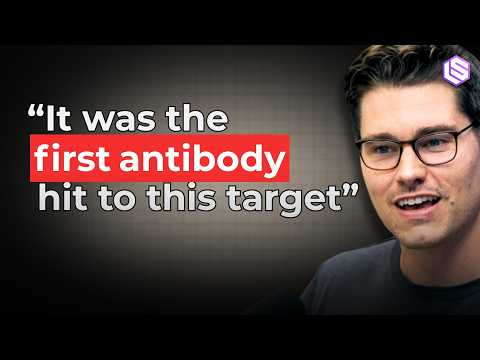
Chai Discovery on turning drug discovery into an engineering discipline
Chai Discovery's research and product leads explain how folding and design models turned antibody discovery from blind trial-and-error into declarative precision engineering — and why they sell the models, not the drugs.
~95 minMatt McPartland & Neil Patil on turning biology into a software factory
Chai Discovery's founders explain how AI structure and design models are turning antibody discovery from an obscure, trial-and-error natural science into a software-like precision-engineering discipline.
 ~133 min
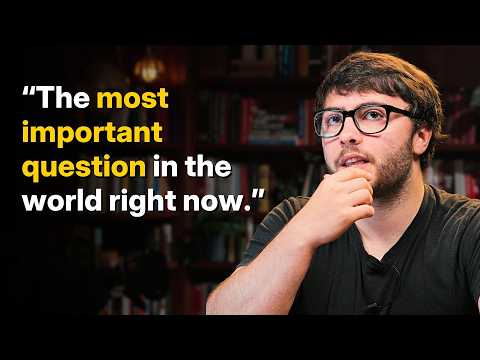
Ryan Greenblatt on why recursive self-improvement is plausible
Redwood Research's Ryan Greenblatt makes the case that automating AI R&D could compress four or five years of progress into a single year — then argues that the same speed would raise the risk of catastrophic misalignment, because AIs trained to chase a high score can learn to cheat, cover it up, and possibly take over rather than turn evil.