Interview, Explained
In-depth breakdowns of tech interviews — section-by-section analysis with diagrams, quotes, and insights.
 ~15 min
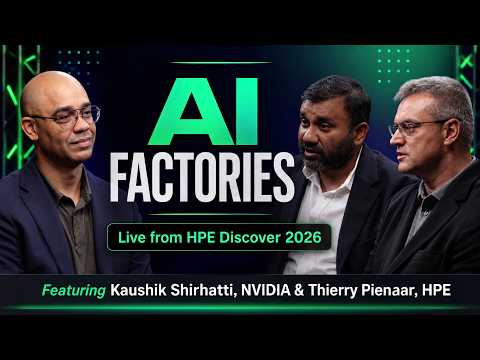
HPE and NVIDIA on the AI Factory: Data In, Intelligence Out
HPE's Thierry Piennar and NVIDIA's Kaushik Shirhatti reframe the 'AI factory' from a rebranded GPU cluster into an operating model — where the decisive work is data quality, organizational unity, and intentional prioritization, not the silicon.
 ~151 min
Aravind Srinivas on why cheap cognition makes curiosity priceless
When cognition costs the same as compute, value moves to what stays scarce — curiosity and good questions — and Srinivas argues that owning your own AI is how individuals keep that power.
 ~109 min
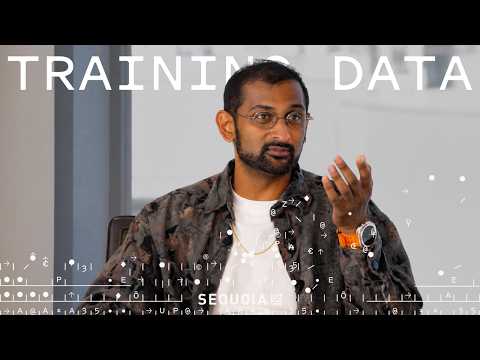
Genesis: AI drug discovery is a science of resolution
Genesis Molecular AI's Evan Feinberg and Sergey Edunov explain how they ported the LLM scaling playbook to 3D molecular structure — synthetic physics data, inference-time 'thinking' in crystal structures, and agents — betting that sub-angstrom resolution is the threshold that turns AI drug discovery from pattern-matching into real medicines.
 ~94 min
Grant Sanderson on Why Math's Hardest Work Resists the Benchmark
AI is racing through math because math is verifiable and grindable, but asking the right question, coining the right definition, and drawing the improbable connection resist every benchmark, so the mathematician's job shifts toward curation.
 ~70 min
Dylan Patel on the 100x hiding in hardware-software co-design
SemiAnalysis founder Dylan Patel argues the biggest AI gains no longer come from faster chips alone — they come from co-designing models, kernels, and silicon together, turning three stacked 2x wins into a single 100x, and reshaping the NVIDIA-vs-TPU, CUDA-moat, and compute-crunch debates in the process.
 ~23 min
Gavriel Cohen on Why AI Agents Are Never Deploy-and-Forget
NanoClaw's founder argues that autonomous work agents are living infrastructure, not software you ship once: because the model underneath keeps changing and the agent can be hijacked, you build it small and auditable, isolate its credentials, roll it out one person at a time, and maintain it forever.
 ~36 min
Noam Brown on Why Reasoning Models Need Budget Curves — Interview, Explained
Noam Brown argues that reasoning models must be evaluated as budget curves, because more test-time compute can unlock capabilities that static benchmark grids hide.
 ~41 min
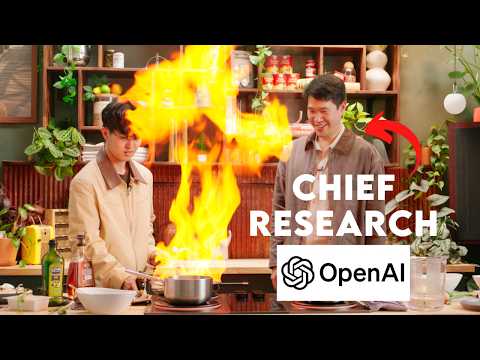
Mark Chen on Why You Can't Cheat the Real World
OpenAI's Chief Research Officer explains why he bets on the exponential, grades progress only against metrics that can't be faked, and runs research like a trader's book of high-risk bets.
 ~70 min
Databricks' Zaharia and Xin on why data, not the model, is the moat
Databricks' co-founders on their one bet — that owning the data and the agent substrate, not the frontier model, is the durable moat in the AI era.
 ~60 min
Dario Amodei on the Smooth Exponential
Why AI progress follows a smooth exponential curve.
 ~21 min
Timothée Lacroix on why chucking weights over the wall isn't enough
Mistral's co-founder and CTO explains why the company wrapped a full stack — service, an inference platform, and its own data centers — around open-weight models, betting that enterprises want control and customization more than being first to the frontier.
 ~146 min
Jensen Huang on Why AI Companies Win by Co-Designing the Whole AI Factory
Jensen Huang reasons from first principles that AI has turned the computer from a retrieval warehouse into a token-generating factory, so NVIDIA now co-designs the entire AI factory instead of just the GPU, riding four compounding scaling laws toward a future he treats as already inevitable.