AI Explained
Plain explanations of trending AI concepts, with live visualizations.
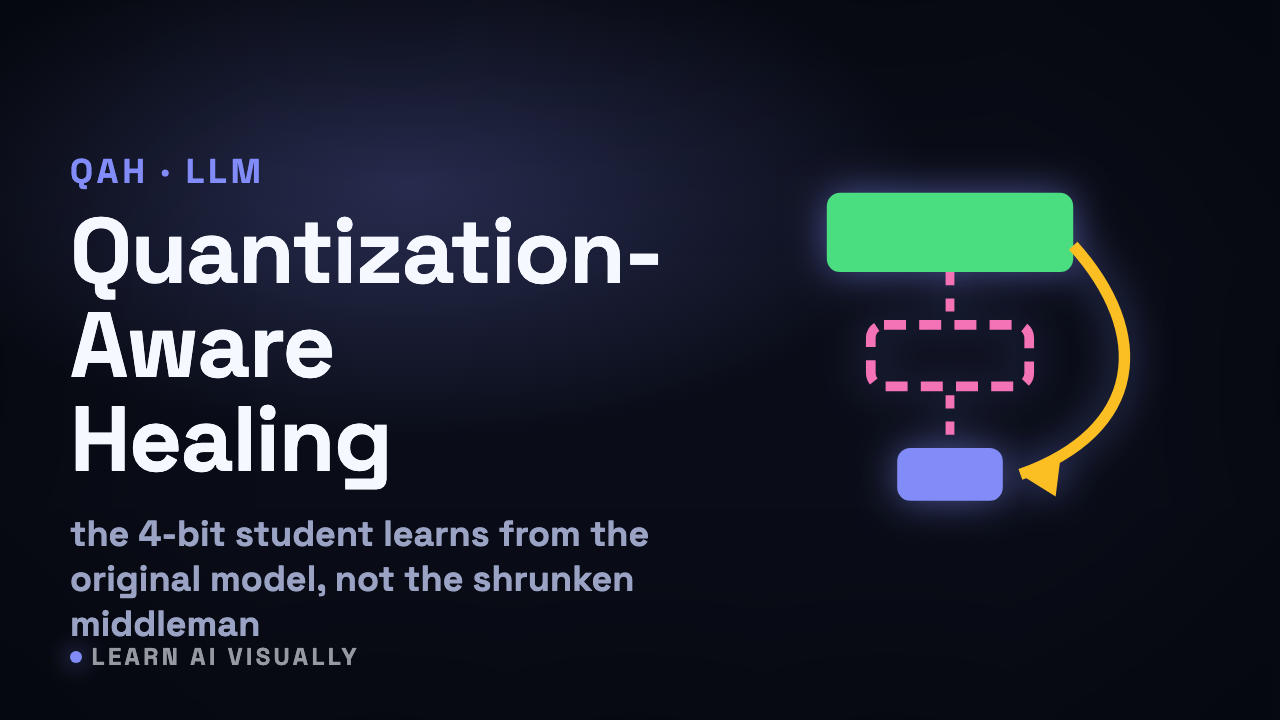
Heal compressed 4-bit LLMs by distilling from the original — Quantization-Aware Healing — What does it mean?
A compress-then-quantize pipeline leaves two possible teachers. QAH picks the original model, not the shrunken checkpoint in the middle.
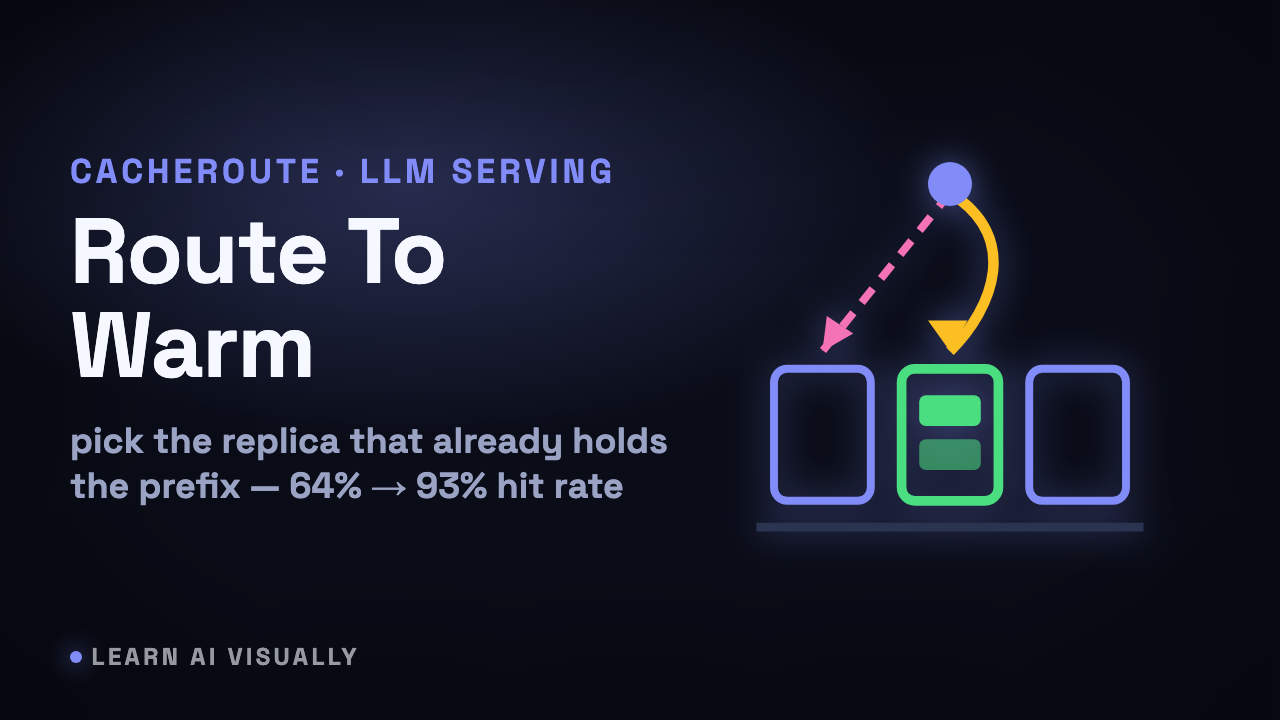
CacheRoute sends repeated prefixes to the server that still holds them — Prefix-affinity routing — What does it mean?
A prefix cache only pays off if the request lands on the machine that has it. CacheRoute makes that a routing decision, and plans it.
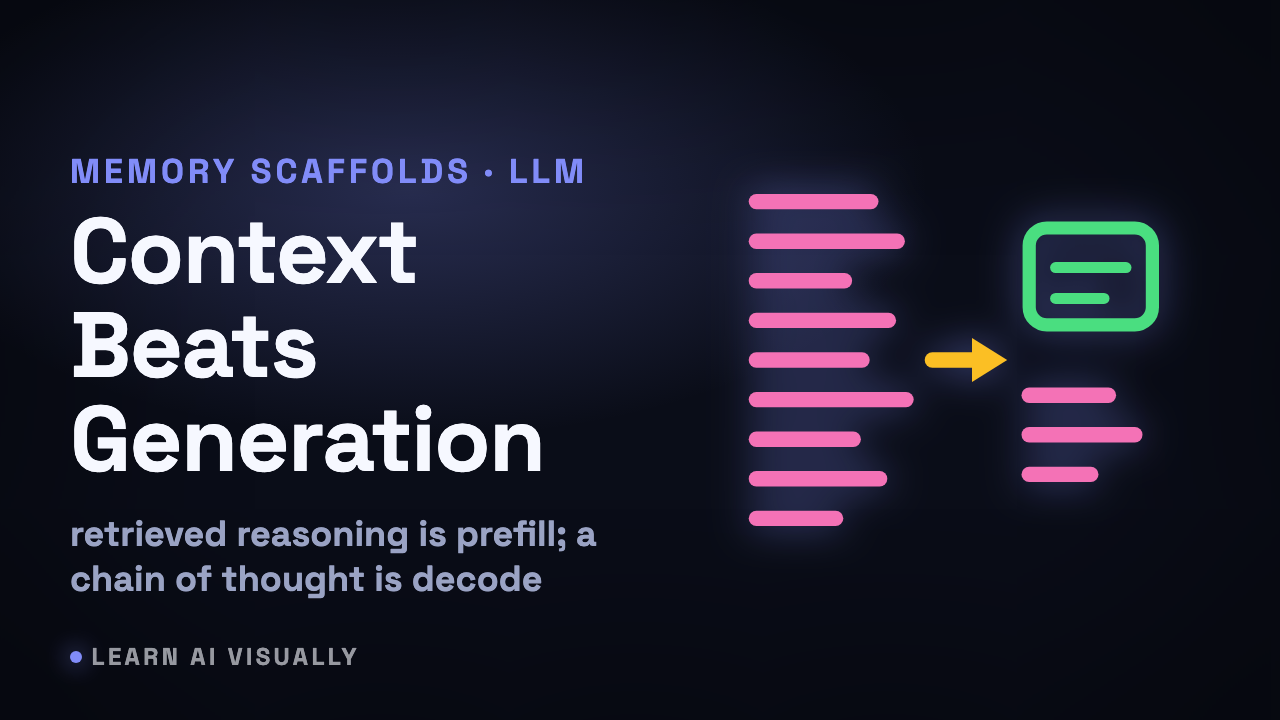
Compress CoT reasoning with reusable memory scaffolds — Context-Generation Substitution Law — What does it mean?
Generated reasoning tokens are the expensive kind. This paper puts the reasoning in the prompt instead, and names the exchange rate.
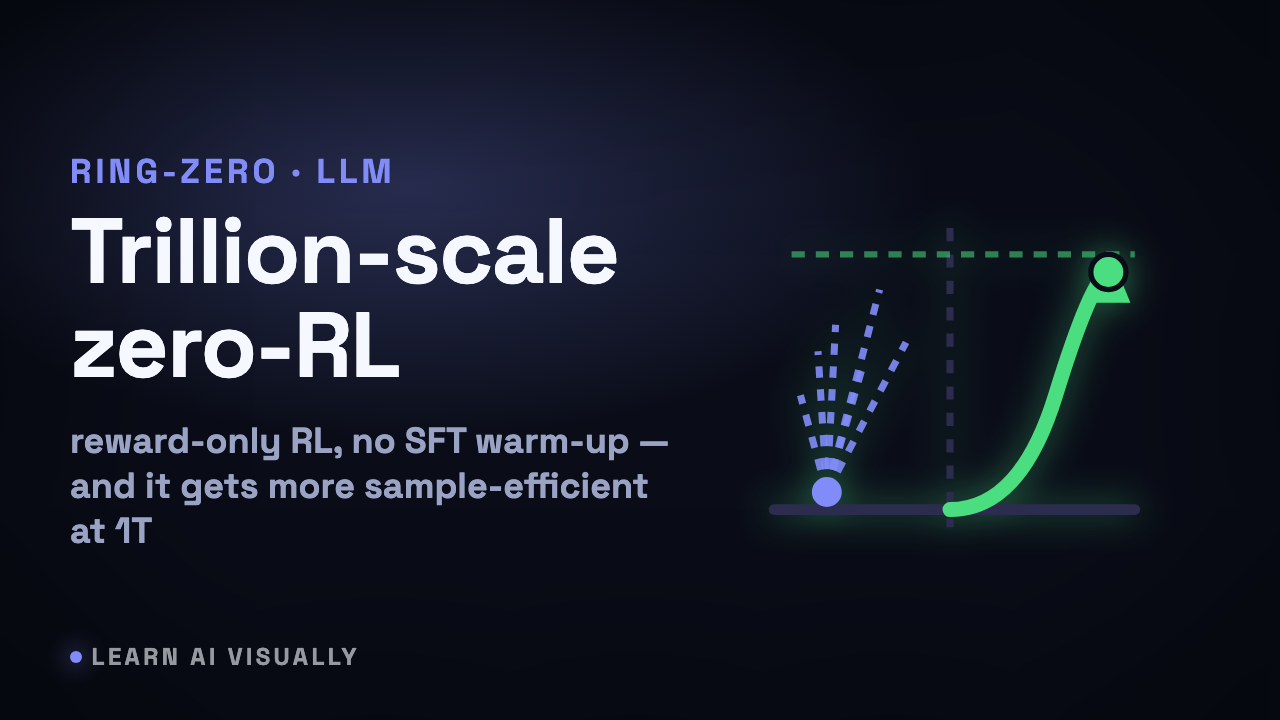
Ring-Zero scales zero-RL reasoning to 1T parameters — Trillion-scale zero-RL — What does it mean?
Ring-Zero runs zero-RL — reward-only RL with no SFT warm-up — at 1T parameters and finds a two-phase discovery-then-sharpening learning pattern.
TIGER routes visual tokens for multimodal speculative decoding — Text-conditioned visual routing — What does it mean?
Speculative decoding helps less on images. TIGER lets the draft model peek only at the image patches its current sentence is about.

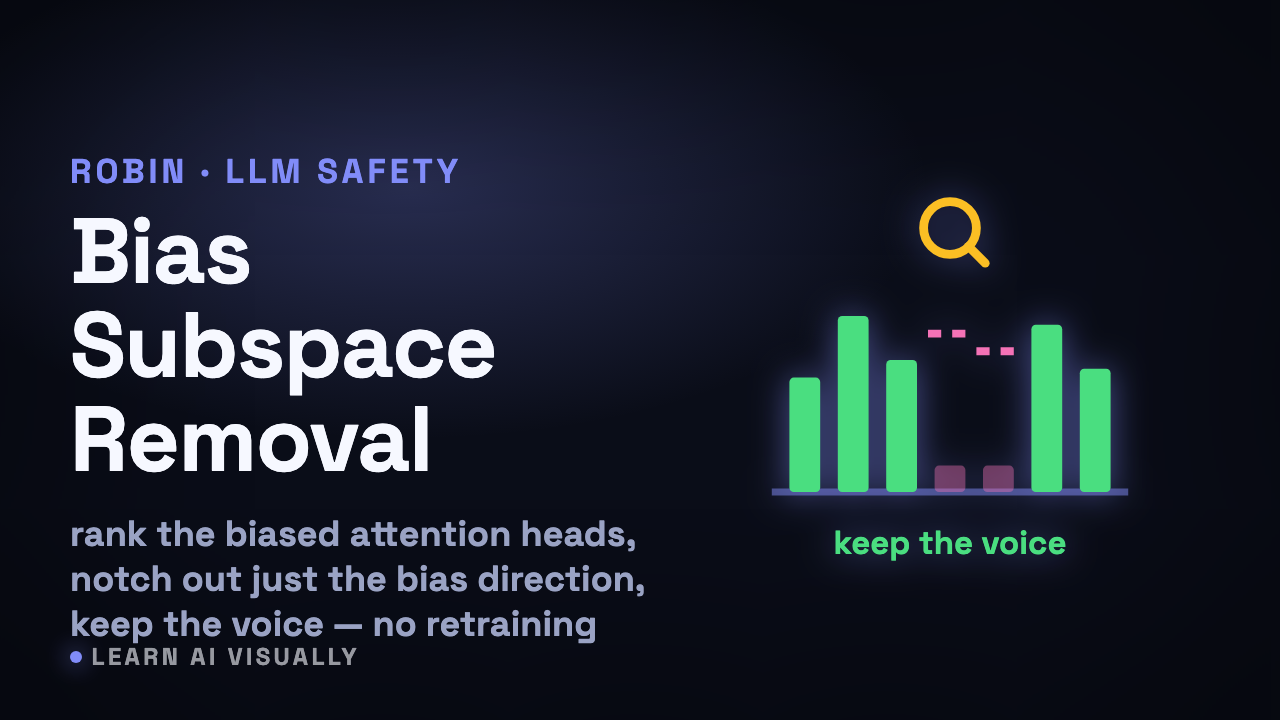
ROBIN repairs biased behavior at transformer head level — Head-level bias subspace removal — What does it mean?
ROBIN localizes bias to specific attention heads with fairness probes, then notches a small bias subspace out of their output at inference — no retraining.
Transformer rank study reframes Pre-Norm as gradient preservation — Rank preservation vs magnitude control — What does it mean?
Skips and Pre-Norm are taught as magnitude control. A theory paper recasts them as what keeps a deep network's gradient rank alive.

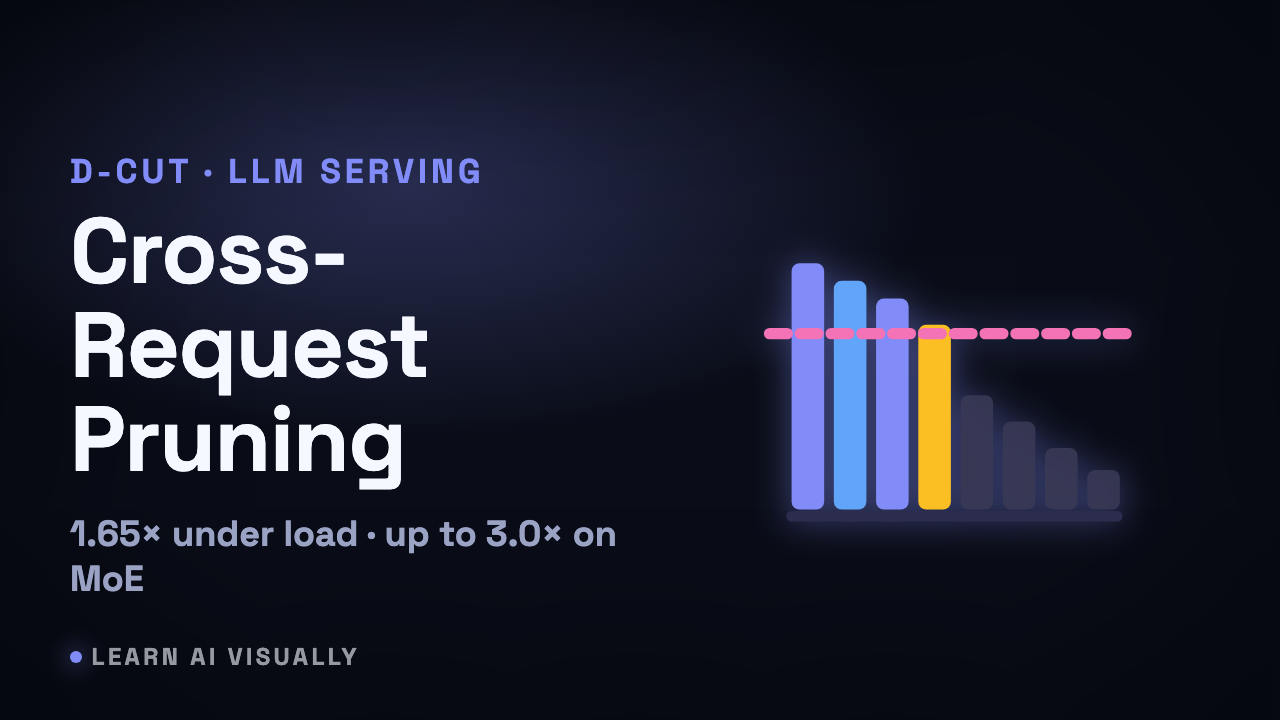
D-Cut prunes speculative decoding verification across batches — Cross-request draft pruning — What does it mean?
Speculative decoding gives every request the same draft depth. D-Cut pools the drafts from all of them and verifies only the ones likely to be accepted.
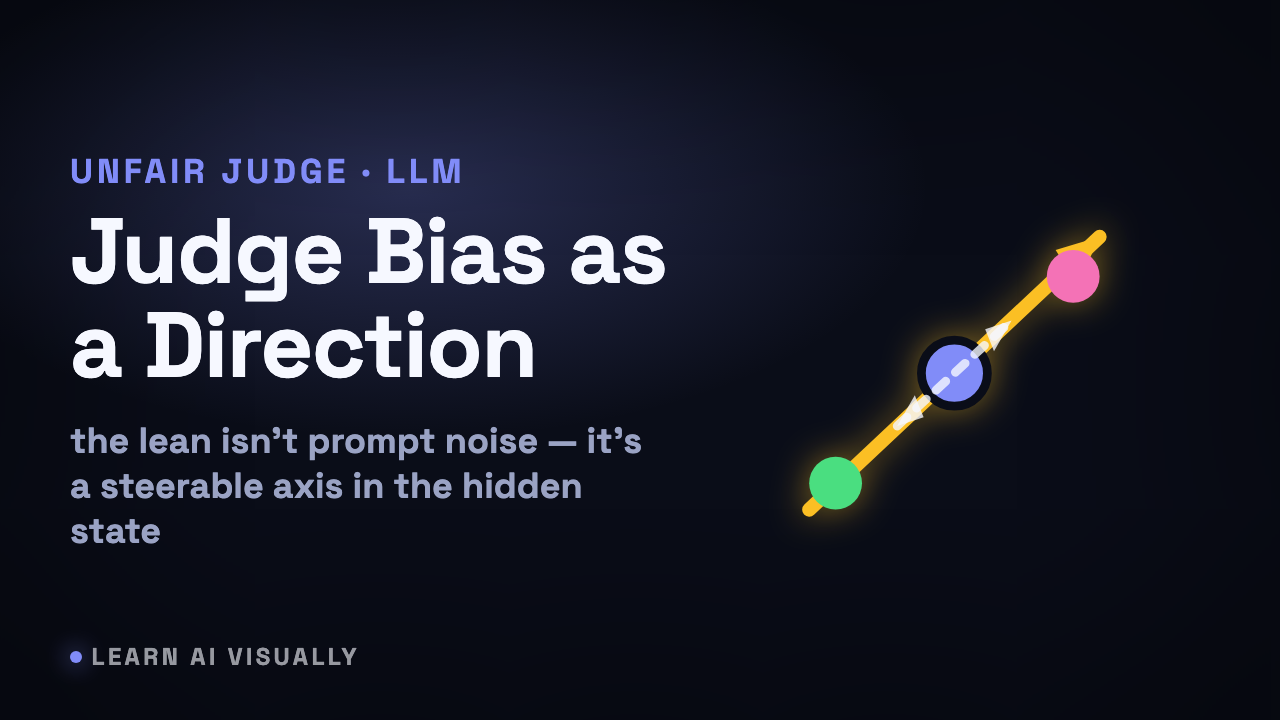
LLM-as-judge bias appears as activation geometry — Steerable bias directions — What does it mean?
LLM-as-judge bias is a steerable direction in the judge's hidden state — a study that reads it, predicts it, and steers it back to baseline.
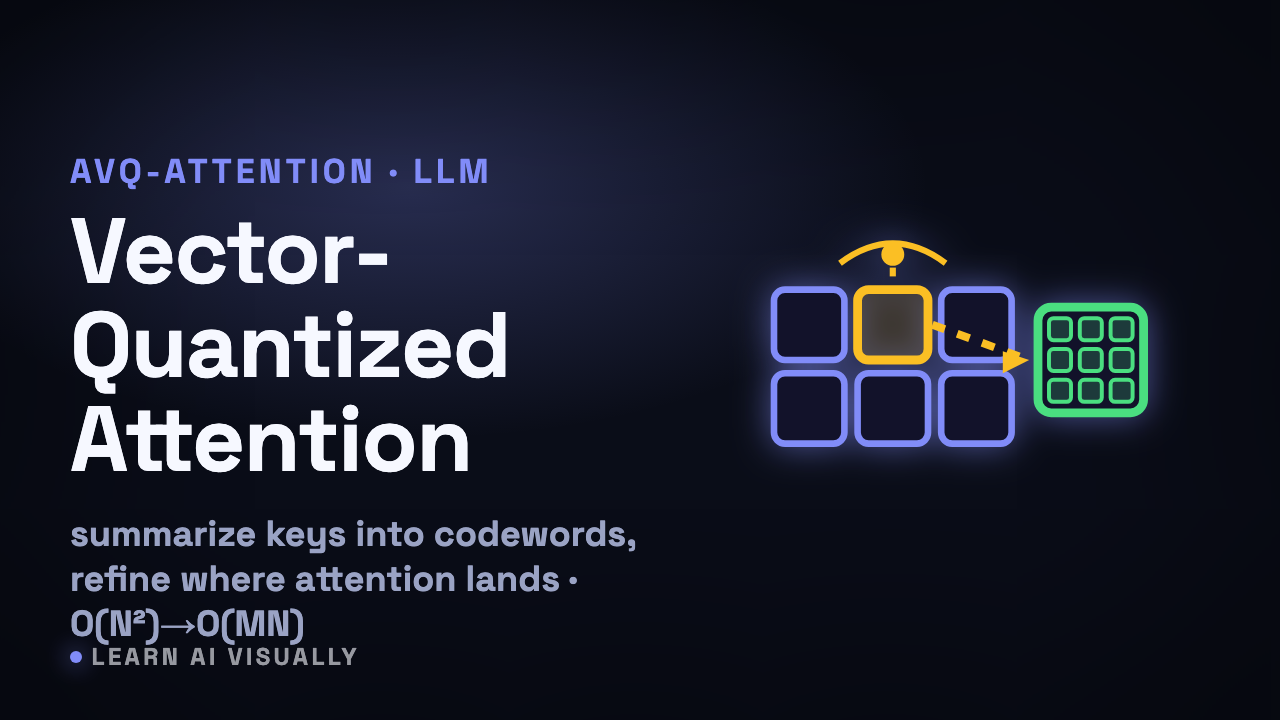
AVQ-Attention refines codewords where attention mass concentrates — Adaptive vector-quantized attention — What does it mean?
AVQ-Attention represents keys as a few codewords, then adds detail only where attention concentrates — turning O(N²) attention into O(MN).
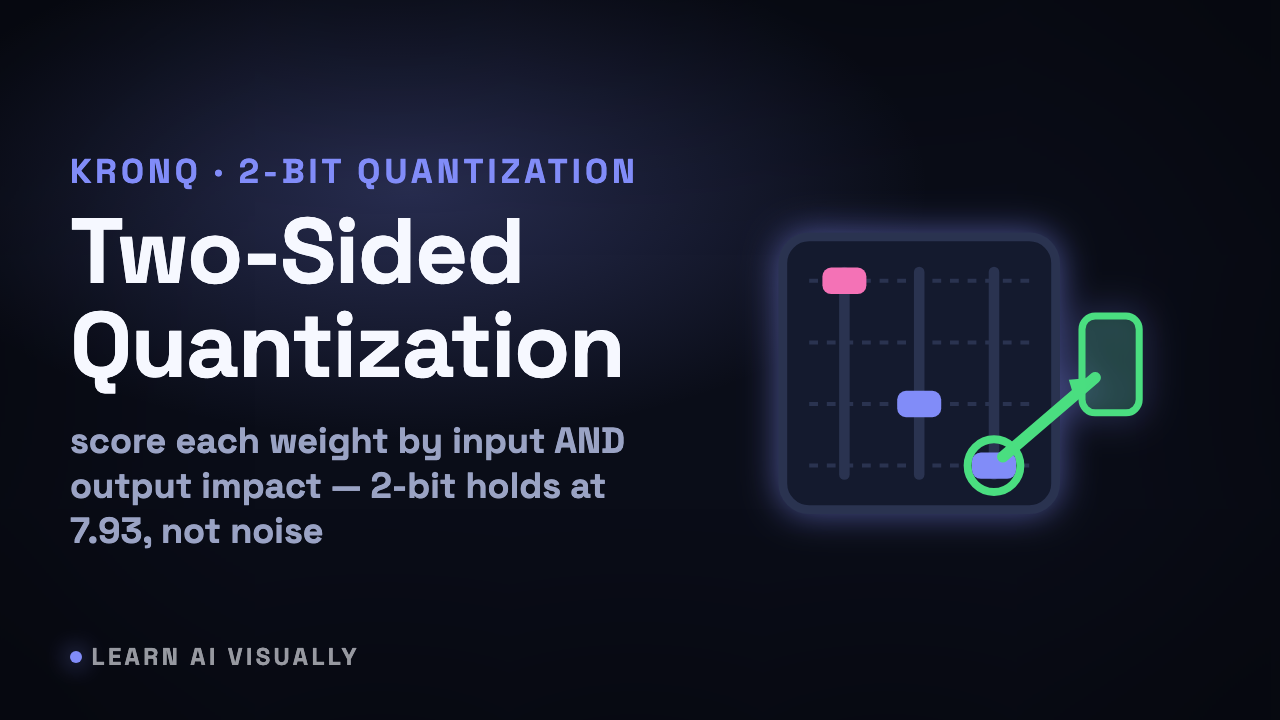
KronQ adds gradient covariance to LLM quantization — Kronecker-factored Hessian — What does it mean?
KronQ scores the rounding error by its output impact, not just its input size — so 2-bit LLaMA-3-70B holds instead of collapsing.
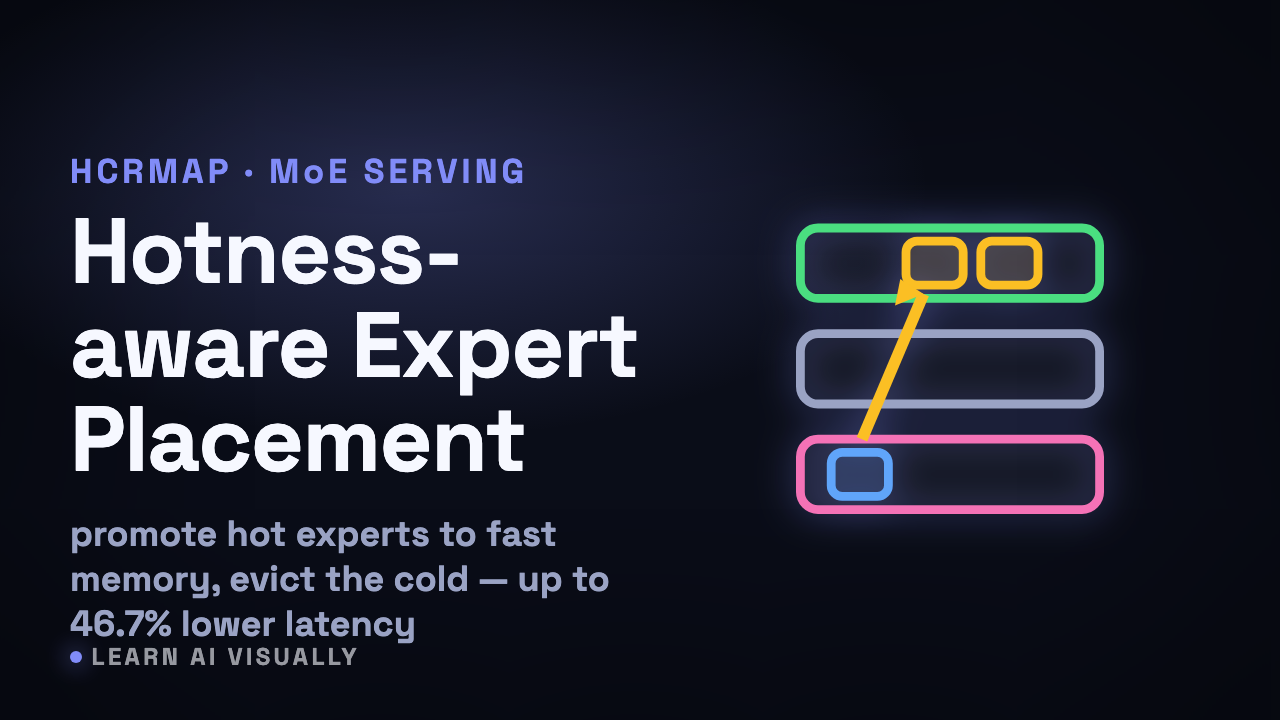
HCRMap places hot MoE experts across chiplet memory tiers — Hotness-aware MoE expert replica placement — What does it mean?
HCRMap ranks each MoE expert by how hot it runs, then promotes or evicts its copies across memory tiers, cutting latency up to 46.7%.